Sofia Butler · 25 September 2026
Atypical Weather Patterns Hasten Crop Maturation Across Area Farmlands
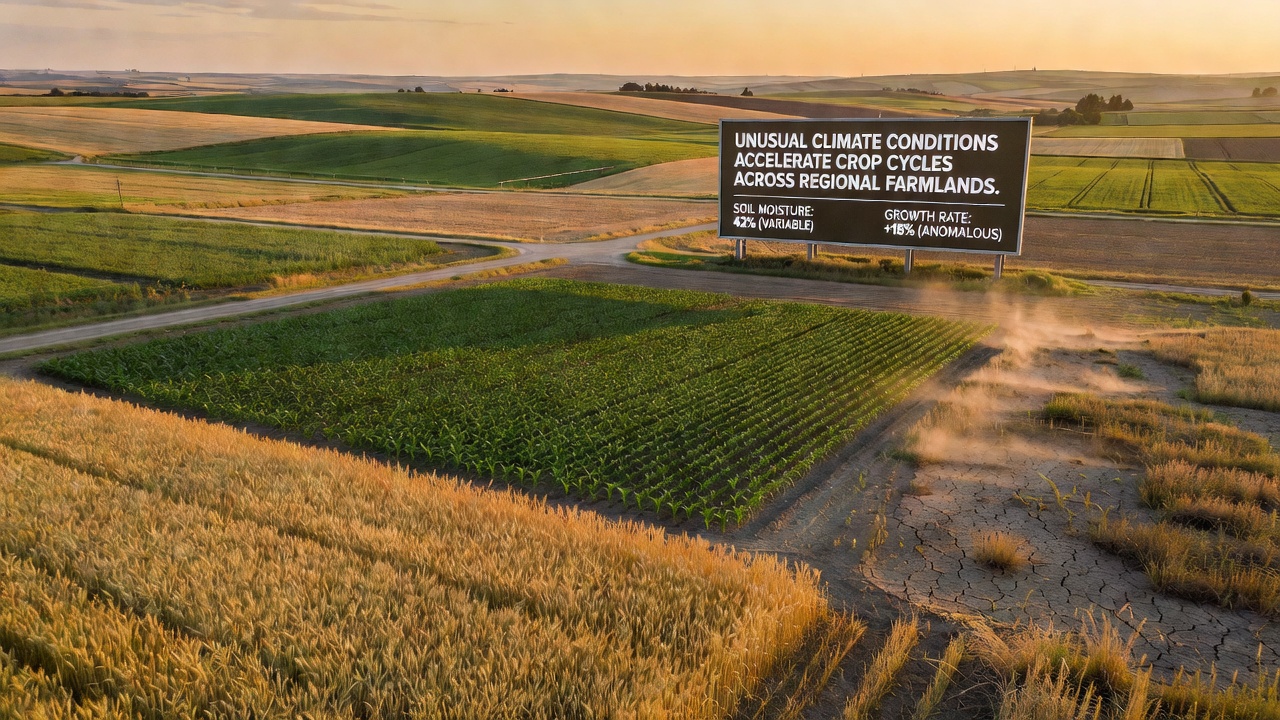
Regional farmlands have recorded measurable shifts in crop development timelines during recent seasons, with data indicating faster maturation periods tied to sustained changes in temperature and precipitation patterns. Monitoring networks across multiple agricultural zones have documented these adjustments, noting that certain staple crops reach harvest readiness weeks earlier than historical averages in some districts.
Documented Shifts in Growth Timelines
Records compiled through 2026 show that spring-planted varieties such as wheat and barley advanced through their phenological stages at accelerated rates in several northern and mid-latitude zones. Researchers tracking these developments point to extended periods of warmer soil temperatures combined with irregular rainfall distribution as primary drivers, rather than isolated weather events. In September 2026, field reports from extension services highlighted that maize plots in affected regions completed grain-filling phases approximately 12 to 18 days ahead of the 1990-2020 baseline.
Soil moisture sensors and satellite vegetation indices have corroborated these observations, revealing earlier peaks in leaf area index and biomass accumulation. Agricultural economists note that such timing changes influence equipment scheduling, labor allocation, and storage logistics for operations managing multiple crop types simultaneously.
Contributing Climate Variables
Analysis from meteorological agencies attributes the acceleration primarily to rising average temperatures during critical growth windows, alongside altered precipitation regimes that sometimes deliver moisture in concentrated bursts. Data from the National Oceanic and Atmospheric Administration indicates that cumulative growing degree days have increased steadily in many temperate zones over the past decade, directly correlating with shortened intervals between planting and maturity for temperature-sensitive species.
European Environment Agency summaries similarly describe how shifts in seasonal temperature thresholds have compressed vegetative and reproductive phases for several broad-acre crops. These patterns emerge consistently across datasets, though local topography and soil types modulate the exact magnitude of change from one farm to the next.
Regional Case Examples
One cooperative in the Midwest United States reported that soybean varieties typically requiring 120 days to reach physiological maturity completed the cycle in 105 days during the 2025-2026 growing season. Parallel observations from Australian grain belts, tracked through CSIRO field trials, found durum wheat advancing through heading and ripening stages roughly two weeks earlier than multi-year averages when cumulative heat units exceeded prior norms.
Canadian prairie provinces documented comparable trends in canola, where pod set and seed fill occurred under milder autumn conditions that extended effective growing windows while simultaneously advancing harvest dates. Across these diverse geographies, producers have adjusted irrigation timing and nutrient applications to align with the compressed calendars.
Implications for Farm Management
Extension specialists emphasize that earlier maturity can reduce exposure to late-season pests and certain fungal pressures, yet it also requires recalibration of equipment availability and market delivery schedules. Studies from university agronomy departments indicate that double-cropping systems may benefit where the first crop vacates fields sooner, allowing a second planting within the same season under favorable conditions.
Seed companies have responded by releasing cultivars with adjusted maturity ratings suited to the new thermal profiles, while insurance providers review actuarial tables that once assumed longer risk exposure periods. These adaptations reflect ongoing responses to the documented acceleration rather than speculative projections.
Conclusion
Long-term monitoring continues to track how sustained climate variables influence crop phenology across regional farmlands. Available datasets from government and academic sources demonstrate consistent patterns of shortened cycles in multiple commodities, prompting operational adjustments at the farm level. Further records collected through subsequent seasons will clarify whether these shifts represent a stable new baseline or continue evolving under changing atmospheric conditions.